
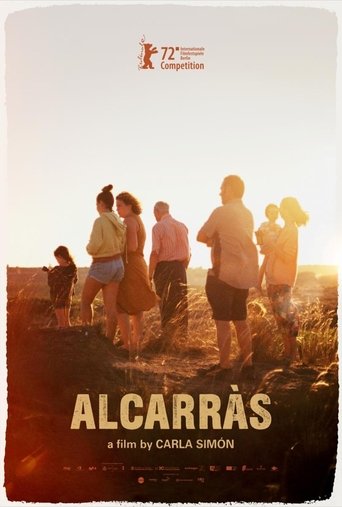
 ★ 6.8FilmAlcarràs2022
DeTodoPeliculas
197 films and series in Spanish and Catalan, 1951 to 2026, chosen for the whole household.
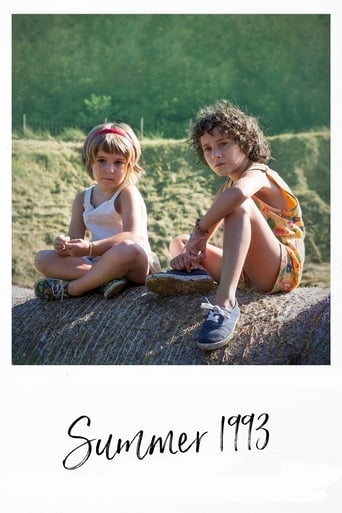 ★ 7.0Film
 ★ 5.7Film
 ★ 5.3Film
 ★ 7.4Film
 ★ 5.5Film
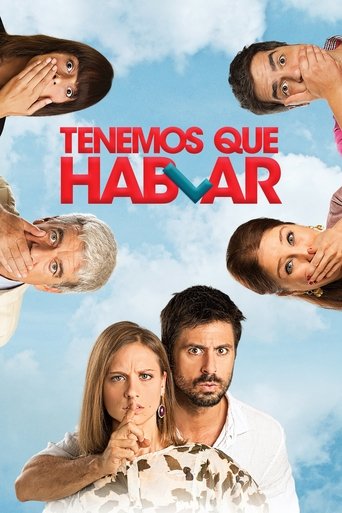 ★ 5.5Film
 ★ 5.4Film
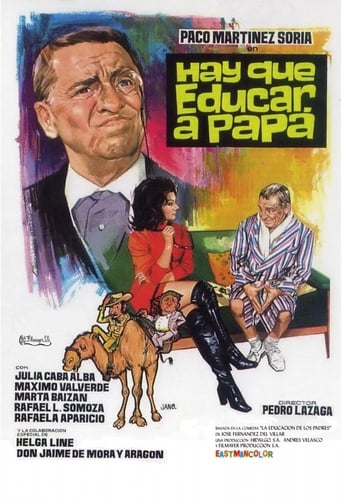 ★ 5.7Film
 ★ 5.3Film
 ★ 5.7Film
 ★ 5.6Film
 ★ 5.3Film
 ★ 5.6Film
 ★ 5.2Film
 ★ 5.5Film
 ★ 5.5Film
 ★ 5.2Film
 ★ 6.8Film
 ★ 5.2Film
 ★ 5.4Film
 ★ 5.5Film
 ★ 5.6Film
 ★ 5.2Film
 ★ 7.1Film
 ★ 6.7Film
 ★ 7.2Film
 ★ 5.8Film
 ★ 7.5Film
 ★ 6.7Film
 ★ 6.7Film
 ★ 6.4Film
 ★ 5.4Film
 ★ 5.8Film
 ★ 6.1Film
 ★ 5.3Film
 ★ 5.7Film
 ★ 5.1Film
 ★ 5.5Film
 ★ 5.7Film
 ★ 5.2Film
 ★ 5.4Film
 ★ 5.5Film
 ★ 5.6Film
 ★ 5.4Film
 ★ 5.1Film
 ★ 5.1Film
 ★ 5.6Film
The DeTodoPeliculas guide to films in Spanish
DeTodoPeliculas: a little of everything in Spanish, with Summer 1993, Alcarràs, The 47, Spy Time, Un rayo de luz, El turismo es un gran invento and Jokes & Cigarettes
Film histories tend to remember a country by its prize winners. Audiences remember something else: the comedian whose films the whole family went to see every Christmas, the child star whose songs their mothers knew by heart, the Sunday afternoon picture shown so often on television that its jokes became family sayings. DeTodoPeliculas, whose name means a little of every kind of film, is a guide to that popular cinema of Spain and Latin America, with the best of the new directors beside it. It holds 197 films and series made between 1951 and 2026, in Spanish and in Catalan, chosen so that a whole household can watch together. Each has a page with its story, cast and original title, and a Watch now button that leads to the official services carrying it.
The catalogue is 188 films and 9 series. One hundred and forty-five are comedies, thirty are films with music, and thirty-four are marked for family viewing; 133 titles come from Spain, sixteen of them in Catalan, thirty-one from Mexico and forty-three from the rest of Latin America. This guide begins with a few sure first choices. It then takes the great comedians of Spain, the song films, the comedy of recent years, the new cinema and the films in Catalan, crosses to Mexico and South America, and closes with the series, choices for children, a note for parents, the search and My List, and a plan for a first fortnight.
What DeTodoPeliculas is
DeTodoPeliculas is a viewing guide, and its pages hold descriptions in place of video. For each title it gives a summary in English, the year, the running time, the director, the leading cast and the original title, which matters a great deal here, since most of these films have only ever been known by their Spanish names. The Watch now button opens JustWatch, an independent directory of official services, for the country you choose. JustWatch shows which subscriptions include the title and where it can be rented or bought. Many of the older Spanish comedies are kept in circulation by the public broadcaster's archive service and by the libraries of the companies that made them. The how to watch page explains the steps.
The selection was made by hand from about 2,600 candidates, most of them little known outside their own countries. Every summary was read. Crime stories, films of the battlefield, horror, bawdy comedies, dramas for adults and daily telenovelas were set aside. A catalogue of popular cinema has modest scores on the public database, where a few hundred enthusiasts have rated films once seen by millions, and the numbers here should be read with that in mind.
Where to begin
Begin with Summer 1993. Frida is six. Her mother has died, and at the start of the summer she is driven from Barcelona to a farmhouse in the hills to live with her uncle, her aunt and their small daughter. She is watchful, jealous and sometimes unkind, and the adults are patient and sometimes at a loss. Carla Simón made the film from her own childhood, in Catalan, with two little girls who seem unaware of the camera, and it tells the truth about how a child grieves and how a family is made. It won the prize for the best first feature at the Berlin festival. Children of ten can watch it; adults seldom forget it.
For a laugh, choose Spy Time. Anacleto, the secret agent of a much-loved Spanish comic strip, a man in a dinner jacket with a cigarette forever at his lip, is now near retirement, and the service has had its budget cut. When an old enemy escapes, Anacleto has to protect his grown son, a mild security guard who believes his father sells cured sausages. Imanol Arias and Quim Gutiérrez play the pair, and the film is a fast, good-humoured action comedy about fathers and sons.
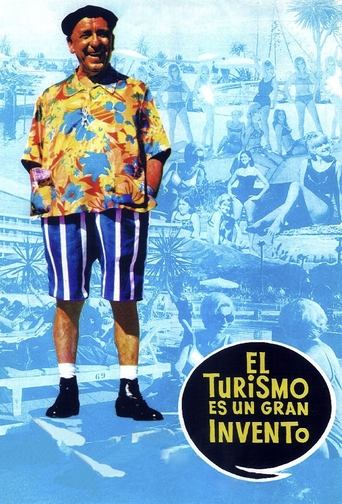
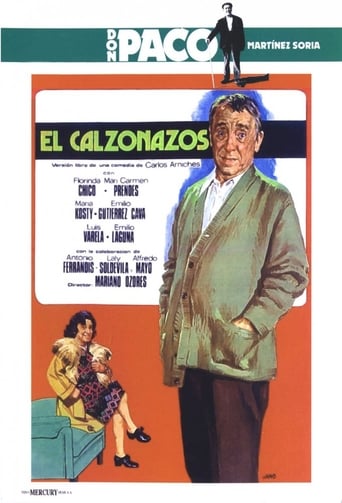
For the classic popular cinema, there is El turismo es un gran invento. Paco Martínez Soria, a stout, beret-wearing actor from Aragon who came to films late and became the biggest draw in the country, plays the mayor of a dusty village who returns from a holiday on the coast convinced that tourism will save his people, and sets off for the resorts with the town clerk to learn how it is done. Made in 1968, at the height of the boom that changed Spain, it is a comedy with a good deal of affection for the country it teases.
And for a true story, try The 47. In 1978 Manolo Vital, a bus driver, took the number 47 off its route and drove it up the steep streets of Torre Baró, a hillside quarter of Barcelona built by its own inhabitants, to prove to the city authorities that a bus could climb there. Eduard Fernández plays him with stubborn warmth, and the film, a celebration of neighbours acting together, was the most honoured Spanish production of its year.
The comedians of Spain
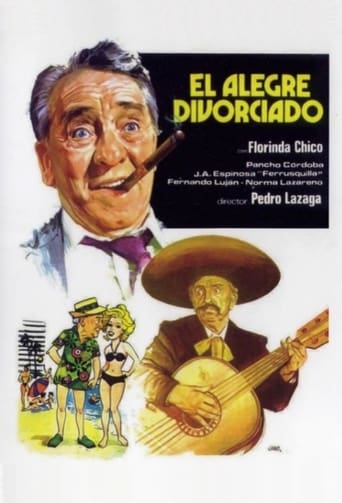
One hundred and forty-five titles are comedies, and the comedy guide arranges them by performer and period. Paco Martínez Soria made the same film many times, and audiences loved him for it: a countryman of fixed ideas and a good heart comes up against modern life and wins. In Hay que educar a papá his daughter, engaged to a count's son, tries to polish his manners. In Hen Pecked a ruined gentleman is afraid to tell his family the truth, El alegre divorciado takes a tavern keeper and his wife to their son's wedding in Mexico, and Es peligroso casarse a los 60, his last film, is about a bachelor who decides at sixty to marry. The catalogue has five of his pictures, enough for a week of evenings.
José Isbert, a tiny man with a voice like a rusty gate, was the best-loved character actor of the generation before. In Los dinamiteros, from 1964, he is one of three respectable pensioners who, tired of queuing for their small monthly payments, plan with great care to rob the offices of their own insurance society; the film is a model of gentle black comedy, and the Mexican actress Sara García, the grandmother of her country's cinema, is his accomplice. Angels at the Wheel is a film of Madrid taxi drivers swapping stories, and The Wicked Carabel, directed by and starring Fernando Fernán Gómez, is about an honest clerk who loses his job, concludes that honesty is to blame and tries, with complete lack of talent, to become a villain.
The sixties were the years of what Spaniards call the comedy of development, light films about a country getting its first cars, flats and holidays. Gracita Morales, with her squeaky voice and air of permanent alarm, and José Luis López Vázquez, the most versatile comic actor Spain has had, lead ¡Cómo está el servicio!, about a country girl in domestic service in Madrid, and Objetivo: BI-KI-NI, a spoof of spy films. Concha Velasco, a dancer who became a great star of stage and screen, appears in Red Cross Girls, in which four young women collect for charity across Madrid on a single day, in Martes y trece and in Pero… ¡en qué país vivimos!, where she is a pop singer set against a singer of traditional copla in a contest to decide the nation's taste. The Girl in Mourning, by Manuel Summers, is a small gem about a couple in an Andalusian town whose wedding is postponed again and again as elderly relatives die and the bride goes back into black.
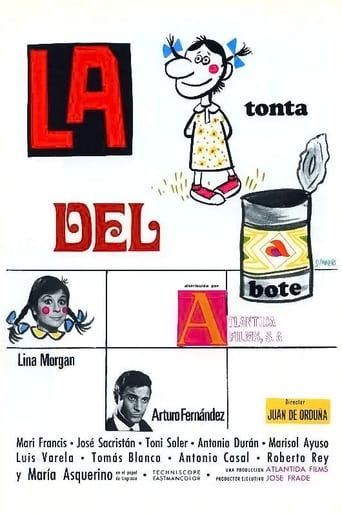
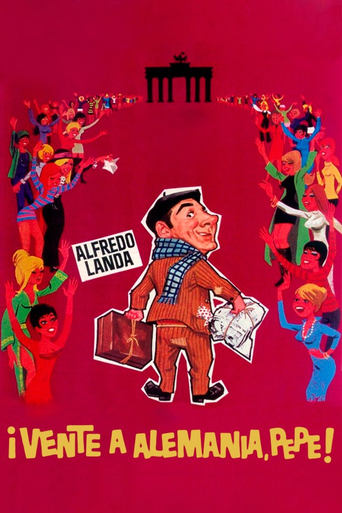
Alfredo Landa gave his name to a whole style of comedy before turning into one of the finest dramatic actors in the country. ¡Vente a Alemania, Pepe!, from 1971, is the best known of his early films: a villager follows a boastful friend to Munich, expecting easy money, and finds himself washing windows at dawn. It is a comedy with a real subject, the two million Spaniards who went north to work. Lina Morgan, the queen of the Madrid revue stage, plays a put-upon orphan in La tonta del bote and a village girl who wins a day with a film star in Un día con Sergio. The double act of Andrés Pajares and Fernando Esteso send up boxing films in Yo hice a Roque III, and Esteso rides again in East of West, a parody western filmed in the desert of Almería where the real ones were made.
Other films of the period show a country in motion. Spaniards in Paris follows four women who go to France to work as maids, with a young Ana Belén among them. Los chicos del Preu is about students in the year before university, The Midshipmen about cadets at the naval academy, and We Are 18 Years Old, the first feature of a director later famous for very different work, sends two girls across Andalusia in an old car. Un, dos, tres, al escondite inglés, made in 1969 by Iván Zulueta, is a pop musical in bright colours about a group of young people who try to sabotage the song chosen for an international contest, with a dozen real bands of the day.
The song films
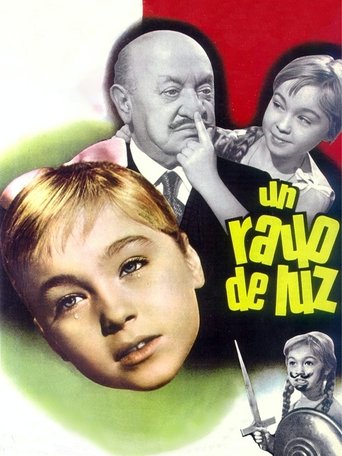
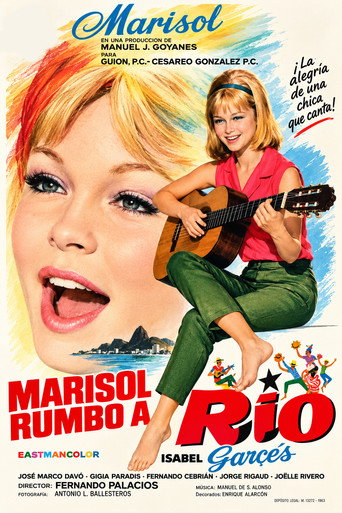
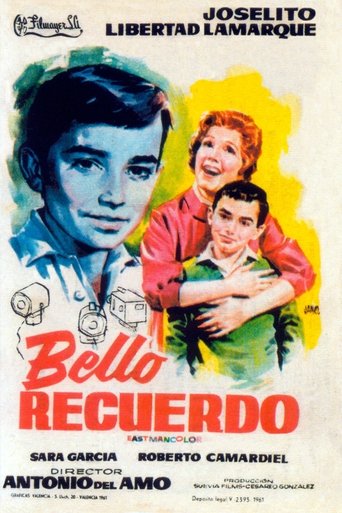
Thirty titles are films with music, and the song films guide introduces their stars. Around 1960 the Spanish studios discovered that a child who could sing would fill every cinema in the country and most of those in Latin America. The first was Joselito, the boy with the golden voice, who is here in Listen to My Song, as a foundling who joins a troupe of travelling puppeteers, and in Bello recuerdo, made in Mexico with the Argentine star Libertad Lamarque. The greatest was Marisol. Pepa Flores, a girl from Málaga with fair hair and blue eyes, was twelve when she made Un rayo de luz in 1960, as a child who wins over her stern Italian grandfather; the film made her the most famous person in Spain. Marisol rumbo a Río gives her two parts, as twin sisters brought up on opposite sides of the Atlantic, and in Find Me That Girl, directed by an American veteran, she is sixteen and sings her way along the Mediterranean coast.
Rocío Dúrcal followed. A teenager from Madrid with a clear, strong voice, she made her debut in Song of Youth, about two neighbouring schools, one for girls and one for boys, and went on to La chica del trébol, Tengo 17 años, Más bonita que ninguna, Buenos días, condesita, in which a girl who sells records at the Madrid flea market passes herself off as an aristocrat, and Amor en el aire, with the Argentine singer Palito Ortega. She later became one of the great voices of Mexican song. The twin sisters known as Pili and Mili star in Como dos gotas de agua, and the films are bright, innocent and full of tunes that Spanish grandparents can still sing.
Adult singers had their films too. Antonio Molina, whose high, ornamented voice was the sound of Spanish radio in the fifties, plays a miner in Esa voz es una mina and appears in Malagueña. The tenor Luis Mariano and the Sevillian star Carmen Sevilla made two lavish musicals with French partners, Imperial Violets, about a flower seller of Granada and the future Empress Eugénie, and La belle de Cadix. The Fair of the Dove films the best-loved of all zarzuelas, the Spanish operettas, a story of jealousy at a Madrid street festival. Manolo Escobar, the most popular singer of the sixties and seventies, is a tourist guide in Todo es posible en Granada, and Lola: The Movie tells the early life of Lola Flores, the flamenco star known simply as La Faraona.
Comedy since 1990
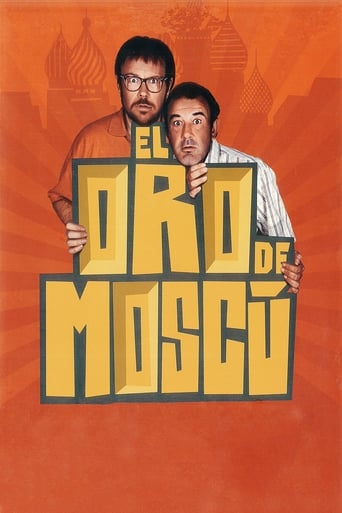
The comedy of the past thirty years is well represented. The Longest Penalty Shot in the World made a film star of Fernando Tejero: he is the reserve goalkeeper of a small club, a man who has spent the whole season on the bench, when a pitch invasion in the last minute of the last match forces a penalty to be retaken a week later with him in goal. For seven days the whole neighbourhood courts him. Moscow Gold gathers most of the comic actors in Spain for a treasure hunt, and Say I Do pairs a shy cinema usher with an ambitious young actress on a television game show for engaged couples, with Paz Vega and Santi Millán.
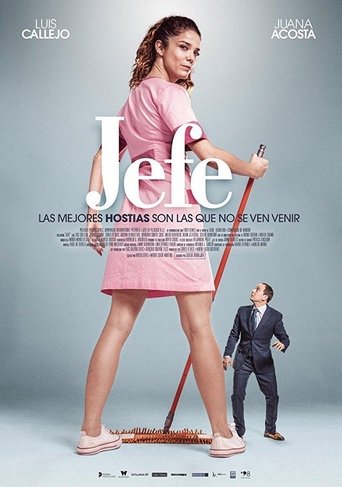
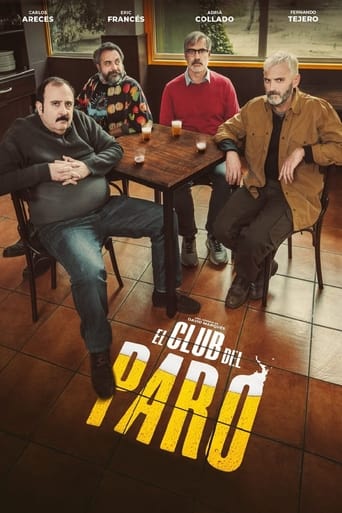
Among recent hits, We Need to Talk is about a young woman who needs a divorce from a husband she has avoided telling a thing or two, We Are Pregnant about a couple trying for a baby, and Under the Same Roof about a divorcing pair who, unable to sell their house, go on living in it. Abracadabra, by Pablo Berger, is odder and richer: at a family wedding a loud, football-mad crane driver volunteers for a hypnotist's act, and comes home changed, to the first delight and growing unease of his wife, played by Maribel Verdú. Mylove Lost follows a couple who break up and lose their cat in the same afternoon, Jefe a businessman barricaded in his office, Co-Husbands two men who meet at a hospital desk, and The Unemployment Club four friends who set the world to rights in a bar every morning.
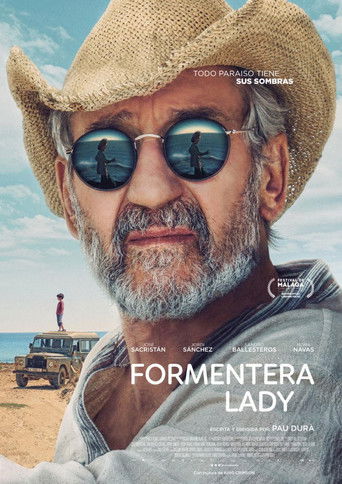
When Brooklyn Met Seville brings an American exchange student to a family in a working-class quarter, It Snows in Benidorm, by Isabel Coixet, sends a retired English bank clerk to the Spanish coast in search of his brother, and Formentera Lady stars José Sacristán as an old hippie whose quiet island life is interrupted by a grandson. Rainbow is a modern musical loosely modelled on a famous journey down a yellow road. Uncle Trouble +2, Better Class, Pizza Movies, One X Two, Bad Hair Day, Little Red Riding Wolf, Mirror, Mirror, En temporada baja, set on a campsite in winter, and Dear Grandma, about a Basque who emigrates to Argentina and lands among people more Basque than he is, are comedies of the last few years. All About Gila is a tribute in which today's comedians perform the telephone monologues of Miguel Gila, the most original Spanish humorist of the century.
Films of the eighties and nineties
Forty-seven titles date from 1980 to 2009, and the guide to those years lists them. The nineties brought a generation of directors who wrote about people of their own age. Hi, Are You Alone? was the first film of Icíar Bollaín: two girls of twenty, one cautious and one fearless, leave Valladolid with a rucksack each and drift to the coast and to Madrid, looking for work, for fun and for a mother one of them barely knows. The Worst Years of Our Lives is a romantic comedy about two brothers, one handsome and one clever, in love with the same girl, and Backroads is a lovely road film set in 1974, in which a teenager and his feckless, charming father cross Spain in a Citroën that is the only thing they own. Time of Happiness spends the summer of 1970 with a theatrical family in a house by the sea.
The veteran Carlos Saura made two of his warmest films in these years. Little Bird sends a boy of ten from Madrid to Murcia for the summer, to a houseful of uncles, cousins and a grandfather played by Francisco Rabal, and it is drawn from the director's own memories. Bunuel and King Solomon's Table imagines the young Buñuel, Lorca and Dalí hunting for a legendary treasure under the streets of Toledo. Pasodoble is a farce about a family who move into a museum, Heart of the Warrior an adventure about a schoolboy who believes he is the hero of his favourite role-playing game, and The Stone Raft, from the novel by José Saramago, a fable in which the Iberian peninsula breaks away from Europe and floats out into the Atlantic. Pápa Piquillo stars the comedian Chiquito de la Calzada as a grandfather who sings in the street with six grandchildren, a monkey and a goat, and La dama boba films a comedy by Lope de Vega in its original verse.
The new cinema
The most admired Spanish films of recent years have been small, personal and closely observed, and the new cinema guide gathers them. After Summer 1993, Carla Simón made Alcarràs, which won the Golden Bear at Berlin in 2022. The Solé family have grown peaches on the same land in Catalonia for three generations, on the strength of a handshake between grandfathers. Now the owner wants the orchard for solar panels, and this will be the last harvest. The film is played by local farmers, and it gives every member of the family, from the grandfather to the smallest cousins, a full share of attention.
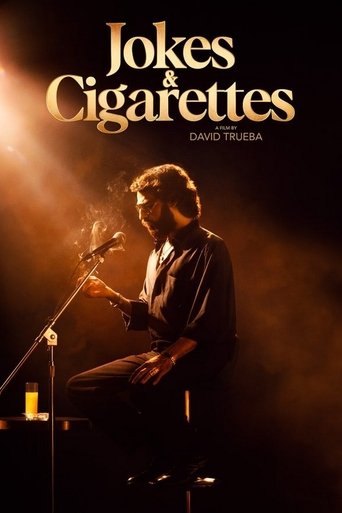
Jonás Trueba makes films about talk, friendship and the passing of time in Madrid. In The Romantic Exiles three friends drive a van to Paris for reasons that all three would struggle to explain. The Reconquest reunites a man and a woman of thirty who were sweethearts at fifteen, for one long night of conversation and dancing, and then shows them at fifteen. You Have to Come and See It lasts just over an hour: two couples, a concert, and a visit to a house in the country. His uncle David Trueba is represented by Bienvenido a casa, Always Winter and Jokes & Cigarettes, the life of Eugenio, a jeweller from Barcelona who in the 1970s became the most famous joke-teller in Spain by standing perfectly still on a stool, in a black shirt, with a glass and a cigarette; David Verdaguer won the national award for best actor in the part. His father Fernando Trueba's The Queen of Spain brings Penélope Cruz back as a film star returning from Hollywood in 1956.
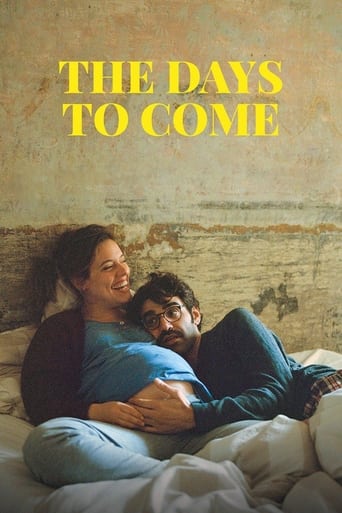
María (and Everybody Else) gives Bárbara Lennie one of her best parts, as a woman of thirty-five who has looked after her father and brothers for so long that she has forgotten to live her own life. The Days to Come follows a young couple through an unplanned pregnancy, played by a real couple who were expecting a real child. Growing Up, Coffee to Go, Back Again, The Golden Legend, which watches a village swimming pool for one summer day, At Your Doorstep, a musical about families facing eviction, and 522. A Cat, a Chinese Guy and My Father are other films of this quiet school.
Films in Catalan
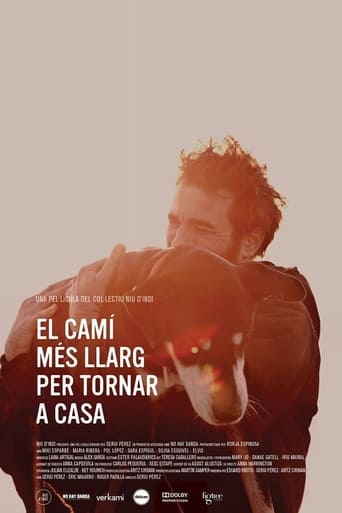
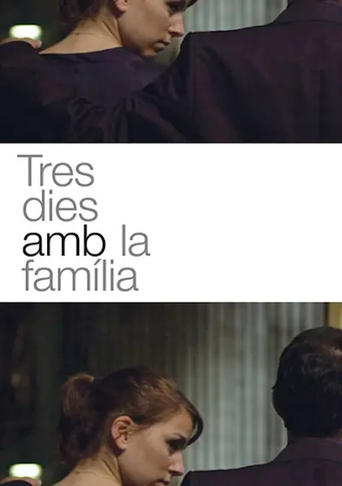
Sixteen films are in Catalan, and the Catalan guide lists them. The oldest is La plaça del Diamant, made in 1982 from the most celebrated novel in the language, the story of a Barcelona shop girl from her first dance in the 1920s through marriage, hardship and the lean years after the Civil War, with Sílvia Munt as the heroine. Anita Takes a Chance stars the great Rosa Maria Sardà as a cinema cashier of fifty who is laid off when her picture house is pulled down, and who goes back every day to watch the building site. Tres dies amb la família observes a family gathered for a grandfather's funeral, and The Long Way Home one very bad day in the life of a man locked out of his flat.
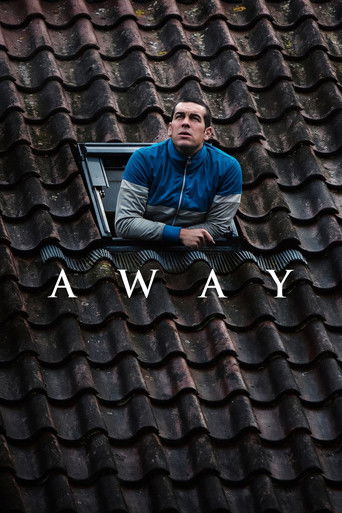
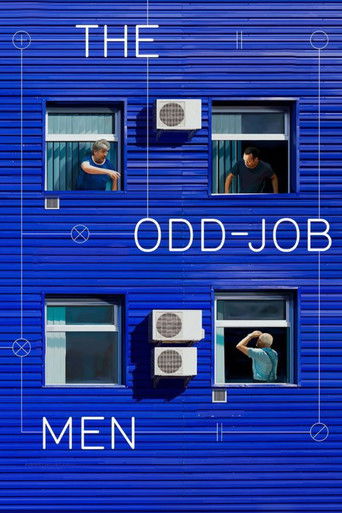
The Odd-Job Men is a comedy made with real plumbers and electricians from the outskirts of Barcelona: a young Moroccan has a week's trial with a small repair firm, and the film follows him and his grumbling senior colleague from job to job. It won acting prizes at Locarno for two men appearing on screen for the first time. Fènix 11-23 tells the true story of a boy of fourteen who was investigated under anti-terrorism law for an e-mail sent from his fan website, and Jean-François and the Meaning of Life sends a bullied twelve-year-old, newly converted to existentialism, on the road to Paris to find his favourite philosopher. Away stars Mario Casas as a man who, at the airport after a football trip to Utrecht, decides on impulse to stay in the Netherlands.
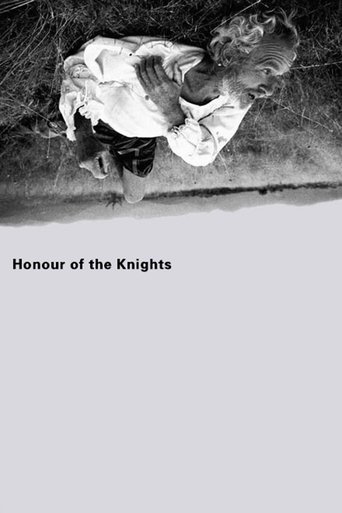
Three films belong to the world of the art house. Honour of the Knights, by Albert Serra, strips Don Quixote down to a knight and a squire walking through fields and waiting for adventures, and is among the highest rated titles in the catalogue. The Silence Before Bach, by Pere Portabella, is a set of scenes about the composer's music, played in lorries, underground trains and cathedrals, and Little Indi is the story of a boy, a songbird and a fox on the edge of the city.
Mexico
Thirty-one films come from Mexico, and the Mexico guide arranges them. The comedians of the golden age are here in force. Germán Valdés, the lanky, jive-talking Tin Tan, stars in El mariachi desconocido, which many consider his funniest film. Adalberto Martínez, the rubber-legged dancer called Resortes, pretends to be a Martian in The Flying Saucers. Antonio Espino, known as Clavillazo, leads Pobres millonarios, and Gaspar Henaine, the round and gentle Capulina who was the favourite of several generations of children, is an airport mechanic in El mundo de los aviones and a bank janitor turned police cadet in El sargento Capulina.
Mexico made a great many films for children. El Papelerito, from 1951, is a tender story of three newspaper boys and the old woman who looks after them, with Sara García. René Cardona, the head of a film-making dynasty, directed his grandson in Zindy, the Swamp Boy, about a child growing up in the jungle with his grandfather and a chimpanzee, and in El pequeño Robin Hood. Chabelo Y Pepito en La Lampara Maravillosa gives two television favourites a magic lamp, and 800 Leagues Over the Amazon films Jules Verne's novel of a family rafting down the great river. Aunt Isabel's Garden, by Felipe Cazals, follows shipwrecked conquistadors through the forests of Yucatán, and My dear Tom Mix is a charming tale of the 1920s in which an elderly aunt, in love with the cowboy heroes of the silent screen, gets an adventure of her own.
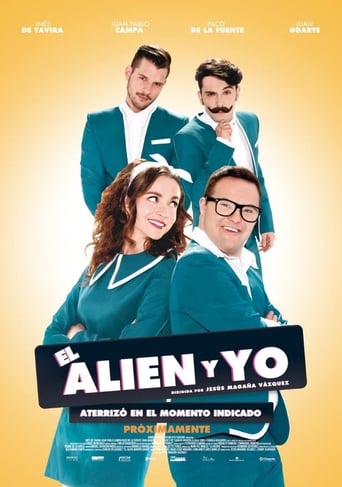
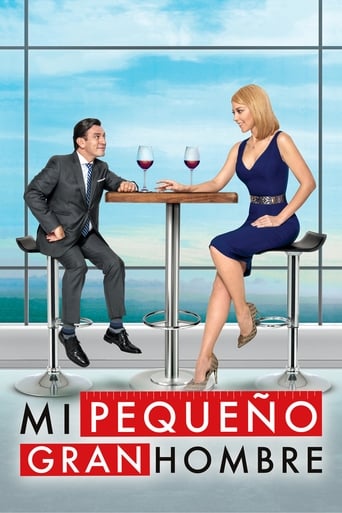
Recent Mexican films in the catalogue are mostly romantic comedies. In My Little Big Man a lawyer loses her telephone and falls for the voice of the stranger who finds it. Happy Times is about a young man too timid to end a relationship, who hires an agency to do it for him, and Bankrolled about two idle friends whose joke proposal for a telephone app raises millions overnight. Road to Mars is a road film with a touch of science fiction, Eddie Reynolds and The Iron Angels reunites a rock band of the 1980s, and The Alien and Me, 40 Years Young, My Mother-in-law Hates Me, Getting My Ex-wife Back, 7 años de matrimonio, Oliverio and the Pool, David and The Zebra, a comic adventure of the revolutionary years, are others worth a look.
Argentina and its neighbours
Forty-three titles come from the rest of Latin America, and the Latin America guide maps them. Carlos Sorín, the gentlest of Argentine directors, is here twice. A King and His Movie, which won the prize for the best first film at Venice in 1986, is a comedy about a director trying to film the true story of a Frenchman who declared himself king of Patagonia, with an ever-shrinking cast and budget. Gone Fishing, a quarter of a century later, sends a salesman to the Patagonian coast to fish for shark and to find his grown daughter.
Guillermo Francella, the most popular Argentine comedian of his generation, stars in An Argentinian in New York, as a father who follows his daughter to the United States, with a seventeen-year-old Natalia Oreiro, and in Daddy Is My Idol. Cohen vs. Rosi is a comedy of two feuding families, one Jewish and one Italian, and a pair of lovers between them. The Tenth Man, by Daniel Burman, wanders through the Jewish quarter of Buenos Aires in the days before Purim, and The German Friend is the story of a friendship in the 1950s between the daughter of refugees and the boy next door. El Cinco follows a hard-tackling footballer in the lower divisions through his last season, and Football or Me a husband who must choose between his marriage and his team. Who Says It's Easy?, Alma mía, Dad for a Day, Pájaros volando, 20,000 Kisses, Aire libre, Partners By Accident, Amapola, Astrogauchos, about an Argentine plan to reach the Moon in 1966, and Again Once Again complete the Argentine list.
From Colombia come The Trip 3, from the long-running series of family holiday comedies, Teresa's Trip, Güelcom tu Colombia, Amalia, la secretaria, Heart of a Lion and Penalty Kick. Chile offers The Life of Fish, a film set at a single party, Optical Illusions, Attitude Test, Son-in-Law and Little White Lie, a comedy about the only reporter on a small-town newspaper, who begins to invent the news. The Best Families and My Worst Wedding are Peruvian, Nueba Yol: Por fin llegó Balbuena is the best-loved comedy of the Dominican Republic, about an innocent who goes to New York, and Who's the Boss? comes from the same island. The Dog Thief, from Bolivia, follows a shoeshine boy of thirteen in La Paz who decides that a lonely tailor may be his father, and Domingo and the Mist is a Costa Rican film about a widower who refuses to sell his land.
Football on film
Football runs through this catalogue, and the football guide lists the films. Beside The Longest Penalty Shot in the World, El Cinco, Football or Me and Penalty Kick, there is The Dream of Ivan, a family film in which a boy of eleven is picked for a children's world team to play a charity match against the greatest stars of the game, and Matías, juez de línea, a comedy about a linesman who has promised his mother always to tell the truth. In One X Two a group of old friends who have filled in the football pools together for twenty years find themselves, one weekend, with every result right but one.
The series
Nine series are in the catalogue, with 204 episodes between them, and the series guide gives the details. Spanish television in the early 1980s made a set of handsome biographical series for the national broadcaster. Cervantes tells the life of the author of Don Quixote in nine parts, from the battle that cost him the use of a hand to his years of captivity and his late fame. Goya follows the painter from his village in Aragon to the court and to exile, and Blasco Ibáñez, directed by Luis García Berlanga, the novelist and politician from Valencia who became a best-seller in Hollywood. Anillos de Oro, written by and starring Ana Diosdado, was a landmark of 1983: two lawyers open a practice specialising in the newly legal business of divorce, and each episode is a different marriage.
From Argentina comes El maestro, with the great actor Julio Chávez as a former ballet star who runs a neighbourhood dance school, and the school comedy As the Bell Rings (Argentine). La ronca de oro is a Colombian life of the singer Helenita Vargas, and 2091 a science fiction adventure about seven young video game champions sent to a moon of Jupiter. Flipante Noa, for younger viewers, is about a girl from Antarctica at a school for acrobats.
The craftsmen behind the comedies
Popular cinema is made by professionals who seldom win prizes, and a few names recur so often in this catalogue that they deserve an introduction. Pedro Lazaga directed more than ninety films in thirty years, and seven of them are here, among them El turismo es un gran invento, ¡Vente a Alemania, Pepe!, Los chicos del Preu and The Midshipmen. He had been a film editor, and it shows in the pace: his comedies move. Mariano Ozores, the most prolific of them all, wrote and directed ¡Cómo está el servicio!, Objetivo: BI-KI-NI, Hen Pecked, Yo hice a Roque III and East of West, working with a regular company that included his own brothers. Luis Lucia was the specialist in child stars, the man who launched both Marisol in Un rayo de luz and Rocío Dúrcal in Song of Youth, and Luis César Amadori, an Argentine who settled in Madrid, gave the Dúrcal films their polish.
Antonio Mercero deserves a paragraph to himself. Beside Tobi and La guerra de papá, he created several of the best-loved series in the history of Spanish television, and he had a rare gift for directing small children. José Luis Sáenz de Heredia, who made The Fair of the Dove and Pero… ¡en qué país vivimos!, had been the leading director of the 1940s and turned in later life to musical comedy. In Mexico, the three generations of the Cardona family, grandfather, son and grandson, between them directed or starred in several of the children's films listed here, and Agustín P. Delgado and Fernando Cortés supplied the comedians with vehicles year after year.
The writers mattered as much. Many of the Spanish comedies of the sixties came from stage hits by authors such as Alfonso Paso and Miguel Mihura, whose plays filled the theatres of Madrid, and the dialogue has a snap that survives translation. The song films, for their part, were built around composers: Augusto Algueró wrote the tunes that Marisol and Rocío Dúrcal made famous, and several of them are still standards.
Faces to look for
The search field accepts the names of actors, and following one is a pleasant way to explore. José Luis López Vázquez, a small, moustached man who could play a fool, a tyrant or a saint, is in El turismo es un gran invento, ¡Cómo está el servicio! and Objetivo: BI-KI-NI. Florinda Chico, Rafaela Aparicio and Julia Caba Alba, the great character actresses, turn up as wives, maids and mothers-in-law throughout the classic comedies. José Sacristán can be seen young in ¡Vente a Alemania, Pepe! and nearly fifty years older in Formentera Lady, and Antonio Resines in Backroads, Time of Happiness, The Queen of Spain and En temporada baja. Candela Peña, one of the best actresses of her generation, began in Hi, Are You Alone? and appears in Sleepless in Madrid.
Among today's stars, Paco León is in We Are Pregnant, Co-Husbands and One X Two and directed Rainbow. David Verdaguer, the leading Catalan actor of the moment, links The Days to Come, Jokes & Cigarettes, Always Winter and Away, and Eduard Fernández Tres dies amb la família and The 47. Itsaso Arana and Francesco Carril are the regular faces of Jonás Trueba's films. Michelle Jenner stars in We Need to Talk and Mylove Lost, Fernando Tejero in The Longest Penalty Shot in the World, 8 Dates and The Unemployment Club, and Luis Tosar turns up, a long way from his usual tough roles, on holiday in Samaná Sunrise.
Where the films take you
The settings are a tour in themselves. Madrid is the capital of the classic comedy: its Gran Vía, its flea market in Buenos días, condesita, its street festival in The Fair of the Dove, its taxi ranks in Angels at the Wheel. The Mediterranean coast in the first years of mass tourism is the subject of El turismo es un gran invento and the background of half a dozen others, and Benidorm, the most famous resort of all, gets a wintry portrait in It Snows in Benidorm. Granada, Seville and Málaga appear in the song films, Murcia in Little Bird, the Balearic Islands in Formentera Lady and The Perfect Stranger, and the orchards and farmhouses of inland Catalonia in Alcarràs and Summer 1993. Barcelona itself is seen from its hills in The 47 and from its workshops in The Odd-Job Men.
Across the ocean, the films visit Mexico City and the jungles of the south, the Jewish quarter and the football grounds of Buenos Aires, the windy coast of Patagonia in Gone Fishing and A King and His Movie, the steep streets of La Paz in The Dog Thief, and the mountains of Costa Rica in Domingo and the Mist. Two films follow Spanish speakers abroad, to Munich in ¡Vente a Alemania, Pepe! and to Paris in Spaniards in Paris, and two more follow them to New York, in An Argentinian in New York and Nueba Yol: Por fin llegó Balbuena.
Choices for children
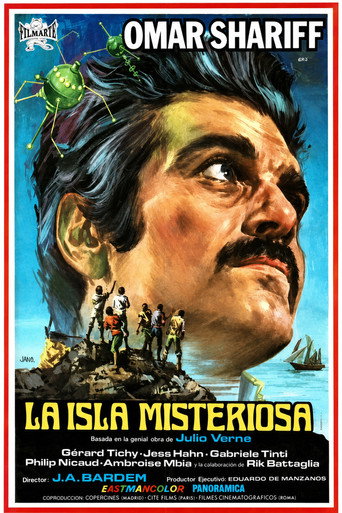
Thirty-four titles are marked for family viewing, and the family viewing guide sorts them by age. For the youngest there are the films of Marisol and Joselito, the Mexican children's adventures, and Tobi, a fable by Antonio Mercero about a small boy who wakes one morning with a pair of wings. Mercero also made La guerra de papá, from a novel by Miguel Delibes, which shows a single day in a comfortable Madrid household entirely from the height of a three-year-old who has just acquired a baby sister; it was one of the most successful Spanish films of the seventies. The Mysterious Island, with Omar Sharif as Captain Nemo, is a full-blooded Jules Verne adventure filmed in the Canary Islands and in Cameroon.
Older children will enjoy The Dream of Ivan, Little Bird, Heart of the Warrior and Jean-François and the Meaning of Life, and teenagers Spy Time, Fènix 11-23 and the school comedies. Summer 1993 and Alcarràs are films that parents and children of ten and over can watch and talk about together.
The films before 1980
Fifty-two films date from before 1980, and the classics guide sets them out by decade. They were made under a censorship that kept politics and a good deal else off the screen, and the film-makers answered with craft, charm and, in the best cases, a sly intelligence. The same faces appear again and again, since Spain had a company of character actors as fine as any in Europe, and watching for them is part of the fun. The films are also a record of a vanished daily life: the trams and corner bars of Madrid, the first seaside hotels, the village squares on feast days. Ninety-eight titles, by contrast, date from 2010 or later, and the recent guide keeps that list up to date.
Spanish, Catalan and subtitles
Most of the catalogue is in Spanish, in the accents of Madrid, Andalusia, Mexico City, Buenos Aires, Bogotá and Santiago. Sixteen films are in Catalan, the language of Barcelona and its region, which a Spanish speaker can follow with a little attention and which has a film culture of its own. Official services generally offer the original soundtrack with subtitles in English and Spanish. The popular comedies are quick and full of slang, and subtitles help; the films of the new cinema are spoken slowly and clearly and make good practice for learners. Each title page shows the original language and the country of production.
A note for parents
Every summary was read by hand before a title was admitted. The classic comedies were made for family audiences and passed a strict censor. Some of the modern comedies are about marriage, divorce and work, and are aimed at adults while staying within the bounds of a family evening. A few dramas deal with loss, among them Summer 1993, Gone Fishing and La plaça del Diamant, which has the hardships of the 1930s and 1940s as its background. Each title page shows the certificate where one is recorded.
Search, lists and My List
The search field in the top bar looks through English and original titles, directors and cast as you type. Try Marisol, Capulina, Trueba or Landa. The Explore column at the left of the home page opens the sixteen lists, which arrange the catalogue by kind, by place and by period, and the finding titles page describes each one, together with the A to Z index.
Each time a title looks promising, its page offers an Add to My List button. The list stays in the browser of the device in your hand, private and ready the moment you return, and the My List page tells you how to store it as a file and open it somewhere else.
The top rated list
Because popular cinema is rated modestly, the top rated list on DeTodoPeliculas takes every title with a score of 6.3 or more from at least eight voters. There are thirteen, and they are the films the critics loved: Summer 1993, Alcarràs, The 47, Jokes & Cigarettes, Honour of the Knights, The Odd-Job Men, The Silence Before Bach, Away, Fènix 11-23, The Long Way Home, La plaça del Diamant, Tres dies amb la família and Jean-François and the Meaning of Life. The comedies and song films, which make up most of the catalogue, are best chosen by star and by mood, and the guides are there to help.
A first fortnight
Here is one way through two weeks with DeTodoPeliculas. On the first evening, Summer 1993. On the second, El turismo es un gran invento, and on the third Spy Time. Give the fourth to Marisol in Un rayo de luz and the fifth to Los dinamiteros. On the sixth, watch The 47, and on the seventh The Longest Penalty Shot in the World. In the second week, try Backroads, ¡Vente a Alemania, Pepe!, Alcarràs, El mariachi desconocido for Tin Tan, A King and His Movie, Jokes & Cigarettes, and finish with The Girl in Mourning. By then you will have laughed in three countries, heard a dozen songs, and seen how a popular cinema and an art cinema can share one language, and DeTodoPeliculas will have more than 180 titles still waiting.
Questions and answers
Questions
What is DeTodoPeliculas?
DeTodoPeliculas is a guide to 197 films and series in Spanish and Catalan, 1951 to 2026, chosen for family viewing and described in English.
Which title should I watch first?
Start with Summer 1993 for drama, Spy Time for comedy, El turismo es un gran invento for a classic or The 47 for a true story.
Is the catalogue suitable for families?
Yes. Every summary was read by hand, and crime stories, films of the battlefield, horror, bawdy comedies and adult dramas were set aside.
Which countries are covered?
Spain with 133 titles, sixteen of them in Catalan, Mexico with 31, and Argentina, Colombia, Chile and others with 43.
Are the films subtitled in English?
DeTodoPeliculas is a guide, and each Watch now button opens JustWatch, where every listed service shows the subtitles and soundtracks it offers in your country.
Who are the stars of the song films?
Marisol, Joselito, Rocío Dúrcal, Antonio Molina, Luis Mariano, Carmen Sevilla and Manolo Escobar, in thirty films with music.
How does My List work?
Press Add to My List on any title page. The list is kept by the browser on this device, and the list page can write it to a file.
Does DeTodoPeliculas host films?
DeTodoPeliculas is a guide only. Every Watch now button opens JustWatch, which lists the official streaming, rental and purchase services for your country.
